Galapagos Islands - 2029 (03-10 Sept)
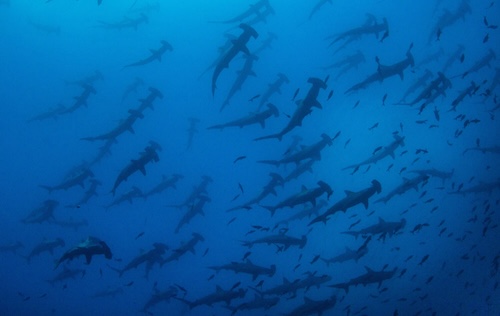
Experienced divers often regard the Galápagos Islands as something of a highlight in their scuba diving career. Huge schools of Great Hammerheads (Sphyrna mokarran) and Scalloped Hammerheads (Sphyrna lewini), indigenous Galápagos Sharks, Mantas, Sea Lions and Dolphins are just a few of the highlights that are often encountered during a liveaboard diving trip.
Click to see more details - Galapagos Islands 2029
.png)
Availability: Contact us for booking information
Undoubtedly some of the most spectacular pelagic diving on the planet, the Galápagos Islands are one of those rare places where you can dive through hundreds of hammerhead sharks to find a whale shark cruising along. Add silky sharks, sea turtles, giant morays and schooling fish in their thousands into the mix… and that’s just the first dive at Darwin!
At Wolf Island you can expect to see huge Galápagos sharks and eagle rays up close, whilst dives at Cabo Marshall will put you face to face with giant manta rays or in the midst of a school of millions of black-striped salemas. Mola mola (Sunfish) may also be seen around Punta Vincente Roca and various other locations across the Galápagos Archipelago. Macro life is plentiful with Black Coral bushes sheltering seahorses, blennies, nudibranchs, hawkfish and frogfish. Marine iguanas are a unique sight, along with speedy Galápagos penguins and playful sea lions.
This is but a mere taste of why divers consistently proclaim Galápagos to have the healthiest marine life in the Pacific. Situated in the middle of the Pacific Ocean, nearly 1,400 km due west from the coast of Ecuador, the archipelago’s unique flora and fauna is mainly due to the isolated location. The various racing ocean currents around the islands bring with them nutrients and the world famous marine life.
Above water, this isolated group of volcanic islands has a striking range of landscapes which are home to an unparalleled number of endemic species. Brought to prominence by Charles Darwin in his renowned book ‘On the Origin of Species’ following his 1835 visit on board HMS Beagle, the islands were named a UNESCO World Heritage Site in 1978.

)