Ten Nights Diving Komodo Aboard the Indo Master
Melissa Arnold Sep 07, 2026
Ten Nights Diving Komodo Aboard the Indo Master
Some trips you plan. Some trips you dream about. And a few, you get to actually live.
This August, eight of us from the Lone Star Scuba crew traded the Texas heat for one of the most extraordinary dive destinations on Earth: Komodo National Park, Indonesia.
We spent ten nights aboard the Indo Master with Master Liveaboards (August 13 to 23, 2026), diving up to four times a day. This is our recap: the marine life, life aboard the boat, what conditions were really like, and yes, the morning the ocean floor itself reminded us who is in charge.
If Komodo has been on your bucket list, consider this your inside look. And if you want to experience it yourself, stick around, because Raja Ampat is next on our list.
The Trip by the Numbers
Ten nights of liveaboard diving in Komodo adds up to:
- 32 dives
- 26 dive sites
- 260 nautical miles traveled
- 500+ marine species encountered
- 28 hours underwater
Swarms of mantas at Manta Alley, sharks and turtles on many of our dives, and coral that honestly has to be seen to be believed.
Mantas, Macro, and Everything in Between
If we had to name a single highlight, Manta Alley would be near the top of everyone's list. We dropped in and found ourselves surrounded by mantas, more than we could count. The current was strong, and yet these giants glided around us effortlessly. There is a special kind of humbling that happens when something with a wingspan wider than you are tall makes the ocean look easy while you are working just to hold your position.
Komodo is famous for that range, and it delivered. On the big-animal side, we had sharks and turtles on many of our dives. On the macro side, the reefs were covered in nudibranchs, those jewel-bright sea slugs that make photographers lose track of time. We even spotted a pygmy seahorse, a blink-and-you-miss-it find.
That is the magic of diving Komodo National Park: one dive you are shooting wide-angle with mantas filling your frame, and the next you are nose-to-fan-coral hunting for something the size of your fingernail.
The Dive Sites: Impossible to Pick a Favorite
Ask any of our eight divers to name their favorite site in Komodo and you will get eight different answers. That is the beauty of this itinerary: it swings from serene, coral-draped slopes to high-octane adrenaline in the same day.
Speaking of adrenaline, the Shotgun lived up to its name. It is exactly the thrilling ride the nickname promises: you tuck in, let the ocean take the wheel, and grin the whole way through. Between macro havens, manta cleaning stations, and current-swept pinnacles alive with fish, Komodo refuses to be boring.
Life Aboard the Indo Master
A liveaboard trip is about more than the diving, and the Indo Master crew set the bar high. From the moment we stepped aboard, they took care of us completely. 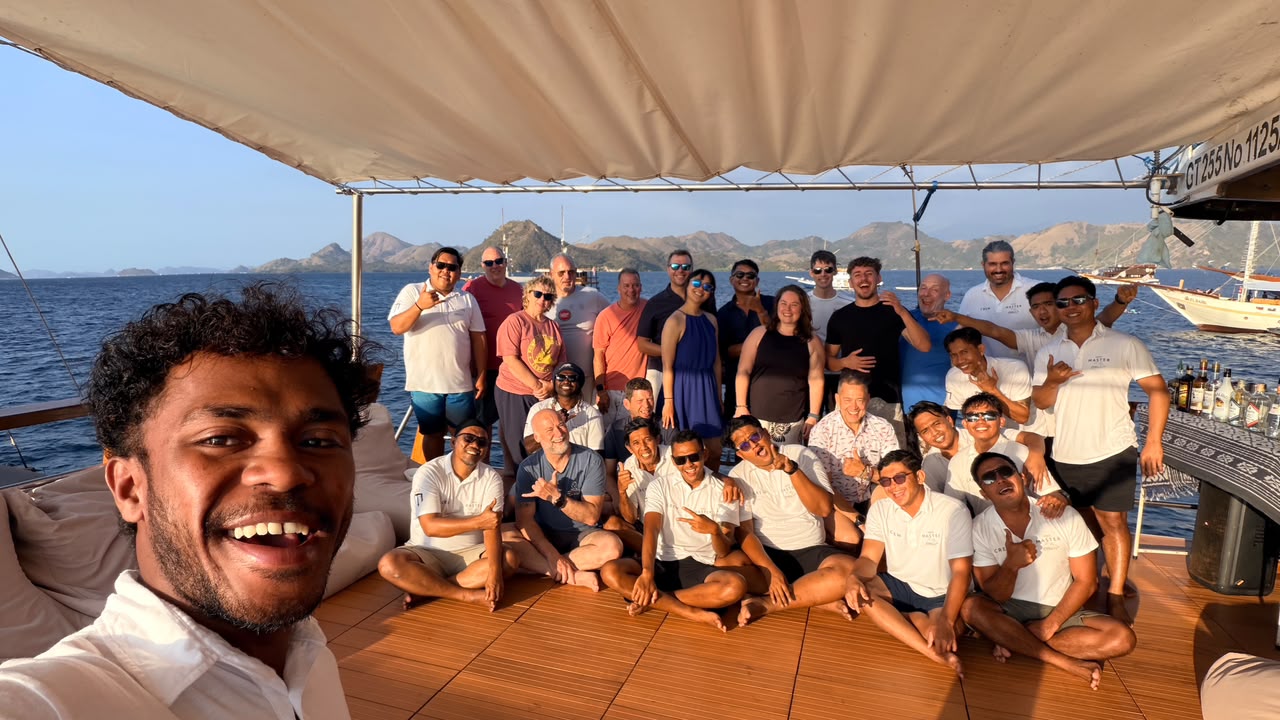
Five meals a day, and all of it delicious. (Yes, five. Liveaboard diving burns through calories.) And here is the detail that tells you everything: the bedding was so comfortable that several of our Lone Star crew actually asked what brand the sheets and pillows were. When divers are taking notes on your linens, you know the boat is doing something right.
The days started early. Those pre-dawn wake-up calls are real, but the underwater sights made every one worth it. The rhythm of liveaboard life is its own kind of magic: roll out before sunrise, dive, eat, sleep, repeat. The sunrises and sunsets were stunning, and life out on the open water is beautiful and quiet.
We also came home with more than photos and logbook entries. We made new friends among the other guests aboard, and we hope to see them again on a future trip.
Conditions and What to Know Before You Go
Water temperature: The northern sites ran warmer, while the southern sites got downright chilly. Our warmest dive was around 81°F (27°C) and our coldest about 68°F (20°C), averaging right around 75°F (24°C). Our warm-blooded folks were comfortable in a 3mm, while others were grateful they packed a 5mm, and in some cases a 7mm. Many of our crew wore Sharkskin Titanium exposure gear, which has the bonus of being neutrally buoyant. Want to know if Sharkskin is right for you? Stop by the shop and we will walk you through it.
Currents: They are part of the Komodo experience. Some dives were relaxed, easy drifts, and others were genuinely strong. Being comfortable in current definitely helps on this itinerary.
Visibility: Generally fabulous. For those of us used to the more murky water we often dive back home, the clarity was a real treat. We love our home water, and we have the privilege of doing our certifications right here at home. Komodo is just a very different kind of blue.
Requirements: For a trip like this, plan on an Advanced Open Water certification, around 50 logged dives, and real comfort in medium to strong currents. Having done it, we can confirm that guidance is spot on.
Beyond the Water: Komodo Dragons and a Bali Bonus
You cannot travel all the way to Komodo National Park and not meet its most famous residents. We went ashore on Komodo Island to see the Komodo dragons in person. Standing near the largest lizard on the planet, in its own wild home, puts the whole trip in perspective.
A few of our crew stretched the adventure even further with extra days in Bali, sampling incredible food and visiting the Sacred Monkey Forest. If you are already flying halfway around the world, a Bali extension is an easy yes.
When Mother Nature Reminds You Who Is in Charge
Mother Nature is powerful, both above the surface and below it.
On August 15, while we were in Komodo, a magnitude 7.7 earthquake struck off the coast of Flores, Indonesia. We were fortunate to experience it safely aboard the boat. Many others were not as lucky, and our hearts are with everyone affected.
The earthquake hit in the early morning hours, so we were not in the water when it happened. But diving afterward, we saw firsthand how the underwater landscape can change. At one of our dive sites, a large section of an overhang had broken clean away. Seeing the freshly exposed rock, and the sheer size of what had moved, was both fascinating and humbling.
We are sharing this moment not to make light of its impact, but because it was an incredible reminder of just how powerful our planet truly is.
What's Next:
If reading this recap gave you even a flicker of "I need to do that," trust it. Trips like these fill up, and there is nothing quite like experiencing the Coral Triangle with your Lone Star Scuba family.
Call us or stop by the shop to claim your spot on the Raja Ampat 2027 trip. Whether you are ready to book or just want to start building the dives and skills to get there, we would love to help you make it happen.
See you in the water!